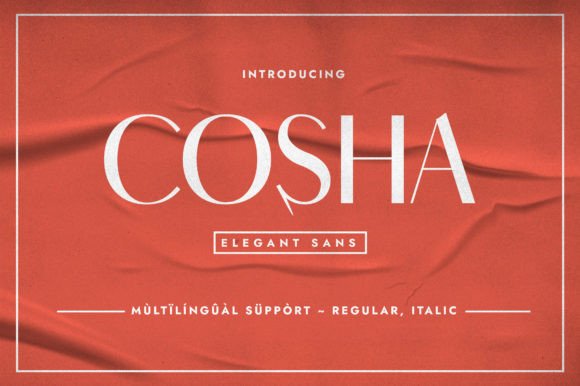
Cosha: The Minimalist Sans Serif Typeface for Modern Web Design
In the fast-paced world of digital product creation, every pixel counts. As a UI designer who spends countless hours refining layouts for landing pages and app screens, I have learned that typography is not just about reading; it is about guiding the user's eye and establishing trust before they even interact with a button. This is where Cosha becomes an indispensable asset. It is a minimalist, chic, and elegant sans serif typeface designed specifically to support delicate projects that require unique stylish touches without overwhelming the content.
When you are building a brand-focused web experience, the choice of a sans serif font often dictates the tone of your entire platform. Cosha offers a clean aesthetic that feels both modern and approachable. Its simplicity makes it a reliable choice when you need to ensure that your message is clear, professional, and visually appealing across all devices. Whether you are designing a high-conversion sales page or a sophisticated portfolio site, Cosha provides the structural integrity needed to hold a layout together while adding a layer of refined personality.
Elevating Visual Hierarchy and Readability
One of the primary challenges in web design is creating a clear visual hierarchy that encourages scanning behavior. Users rarely read every word on a page; instead, they scan for key information. A well-chosen typeface like Cosha can significantly improve this process. The distinct letterforms and balanced spacing allow headlines to stand out against body text, creating a natural flow that leads the user through the narrative of your site.
I frequently use Cosha for hero sections and section headings because its elegant strokes command attention without shouting. In a landscape filled with aggressive, blocky fonts, Cosha offers a softer yet authoritative presence. This is crucial for establishing brand identity. When a visitor lands on your site, the typography sets the immediate expectation of quality. If the font looks cheap or cluttered, the perceived value of your product drops. Conversely, Cosha’s sleek lines signal professionalism and attention to detail, which are essential for driving user engagement and conversion.
Readability is paramount, especially on mobile screens where space is limited. The open counters and consistent stroke width of Cosha ensure that characters remain legible even at smaller sizes. This makes it an excellent candidate for supporting typography in responsive layouts, ensuring that your content remains accessible whether viewed on a large desktop monitor or a compact smartphone. For digital products like online courses or SaaS dashboards, maintaining clarity is non-negotiable, and Cosha delivers exactly that.
Strategic Applications Across Digital Platforms
The versatility of Cosha allows it to adapt seamlessly to various elements within a website or application. Here is how I typically deploy this premium font in real-world projects:
- Hero Sections and Banners: Use the bolder weights of Cosha for main headlines on landing pages. The elegance of the typeface adds a touch of luxury that pairs perfectly with high-quality imagery and video backgrounds.
- Call-to-Action (CTA) Buttons: Short phrases like "Get Started" or "Shop Now" benefit from the clean geometry of Cosha. It ensures that buttons look crisp and inviting, encouraging clicks without appearing generic.
- Online Store Banners: For e-commerce sites, Cosha works beautifully on promotional banners. Its minimal nature prevents the text from competing with product photography, allowing the items to shine while maintaining a cohesive commercial font aesthetic.
- Blog Graphics and Headers: When writing long-form content, using Cosha for article titles creates a sharp contrast with standard body copy. It breaks up the monotony of text blocks and draws the reader back into the content.
- Logo Design and Brand Assets: While primarily a display font, Cosha's unique character makes it suitable for logo text in creative industries. It conveys a sense of modernity that resonates with tech startups, fashion boutiques, and lifestyle brands.
Mastering Font Pairing for Digital Identity
No single typeface can do everything, and part of mastering modern typography is knowing when to pair it with another style. Cosha excels as a display or heading font, but it also serves as a robust companion for other typefaces. For a more editorial digital identity, pairing Cosha with a classic serif font for body text creates a sophisticated balance. The geometric precision of Cosha contrasts nicely with the organic curves of a serif, resulting in a layout that feels curated and intentional.
If your project requires a warmer, more personal touch, you might consider combining Cosha with a subtle script font or handwritten font for accents. However, this must be done sparingly. Since Cosha is already so distinctive, using too many decorative styles can dilute the message. Instead, let Cosha anchor the layout, providing stability, while the secondary font adds flair to specific elements like quotes or signature blocks.
For designers looking to create a completely unified creative font system, Cosha can also be paired with a neutral monospaced font for technical data or code snippets. This combination is particularly effective for developer portfolios or fintech applications where readability and structure are paramount. The key is to maintain consistency in weight and proportion so that the transition between headings and body text feels seamless.
Technical Considerations for Implementation
Before integrating Cosha into your workflow, it is important to verify the file formats and webfont availability. Most premium design assets now come with a comprehensive suite of files, including WOFF and WOFF2 formats optimized for fast loading times. Checking the included styles is crucial; ensure you have access to the full range of weights you need, from light to bold, to handle different levels of emphasis in your layout rhythm.
Multilingual support is another factor to consider if you are targeting a global audience. Verify that the font includes the necessary glyphs for accented characters and alternative languages. A lack of proper encoding can break your design on international sites, leading to missing squares or garbled text. Fortunately, high-quality typefaces like Cosha usually offer extensive language support, making them safe bets for diverse online stores and blogs.
When working with dark backgrounds or image overlays, pay close attention to the font's contrast ratios. Cosha's clean lines generally perform well on both light and dark themes, but testing is always required. Ensure that the white or light-colored text maintains sufficient contrast against the background to meet accessibility standards. This attention to detail not only improves the user experience but also boosts your site's SEO performance, as Google prioritizes accessible and readable content.
Ensuring Commercial Viability and Licensing
As a professional designer, understanding the legal aspects of using fonts is just as important as their visual appeal. Cosha is available as a commercial font, meaning you must adhere to specific licensing terms depending on your project scope. Whether you are building a client website, a template for sale, or a personal blog, having the correct license protects you and your clients from potential legal issues.
Most commercial licenses cover usage on websites, mobile apps, and printed marketing materials. However, some licenses may restrict embedding the font in downloadable templates or software. Always read the end-user license agreement (EULA) carefully. Investing in a legitimate license ensures that you can use Cosha confidently in brand-focused web experiences without worrying about compliance. This peace of mind allows you to focus on what matters most: creating exceptional designs that convert visitors into customers.
In conclusion, Cosha is more than just a set of letters; it is a tool for building trust and clarity in the digital space. Its minimalist charm and functional design make it a standout choice for anyone serious about UI design and editorial design. By incorporating Cosha into your toolkit, you elevate the quality of your work, ensuring that your digital products look polished, professional, and timeless.